Characters, whether human, animal, or alien (or anything in between), make stories worth reading. We love some of them, and we hate others, but ultimately, it’s how we bring our own experiences into our reading – the way we innately compare characters in stories to people we’ve known – that helps us create a context and that guides our interpretation of the meaning of a story.
Authors build characters in several ways – “build” means giving the characters personalities. In literature, it’s called characterization.
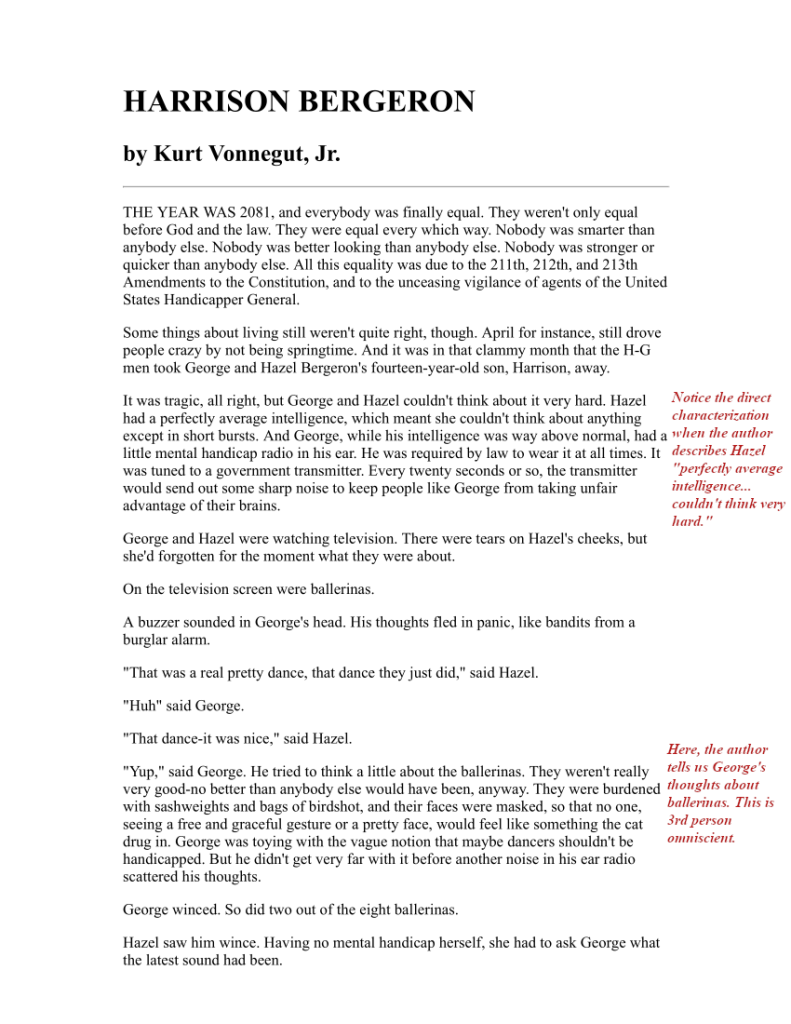
- Authors sometimes come right out and tell us things about characters. That’s called Direct characterization.
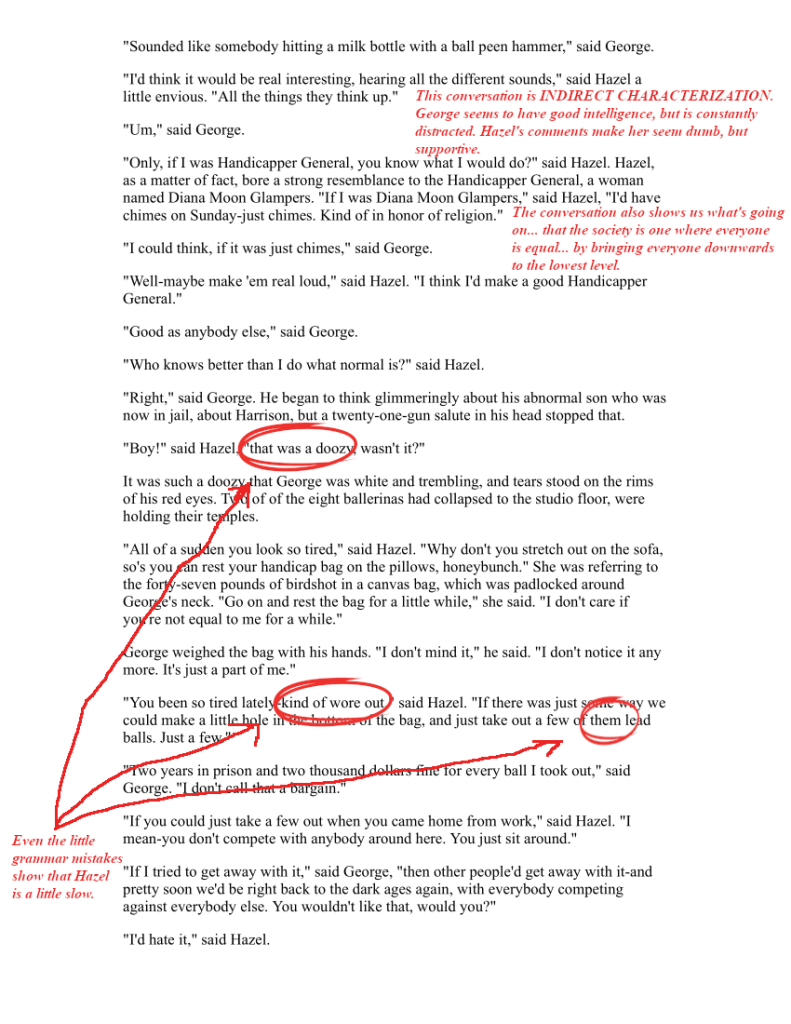
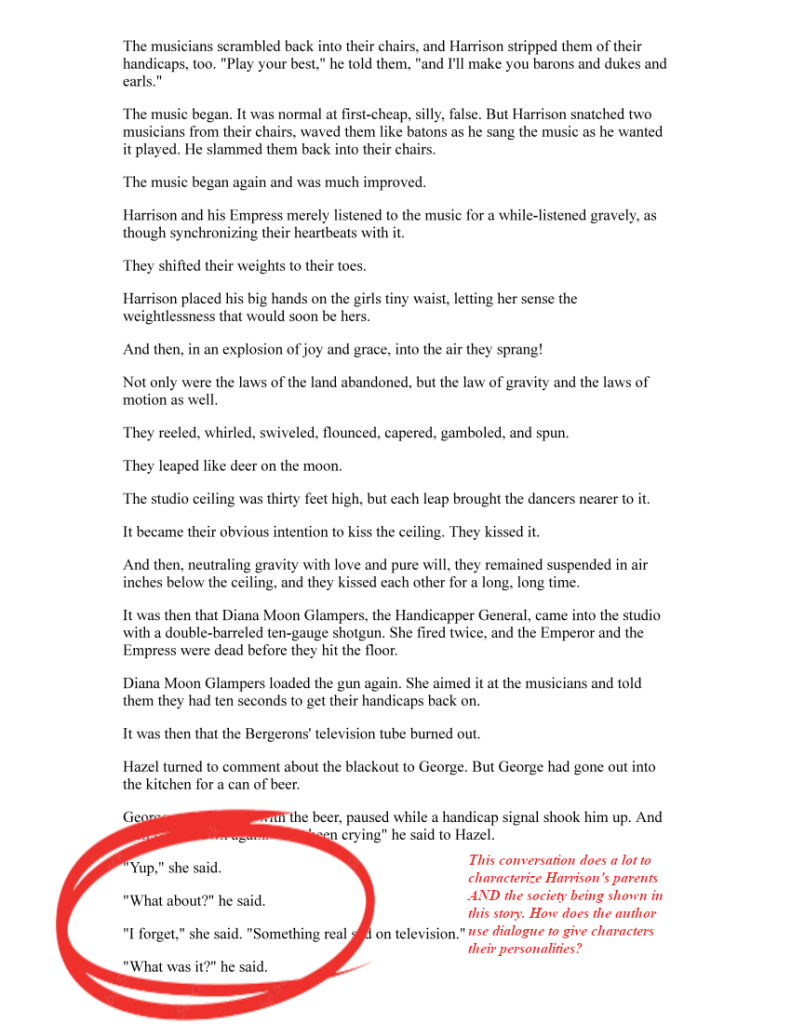
- Most of the time, authors give us clues and hints by the way characters speak, what they say, what they do, what they look like, and what they think. This is called Indirect characterization.
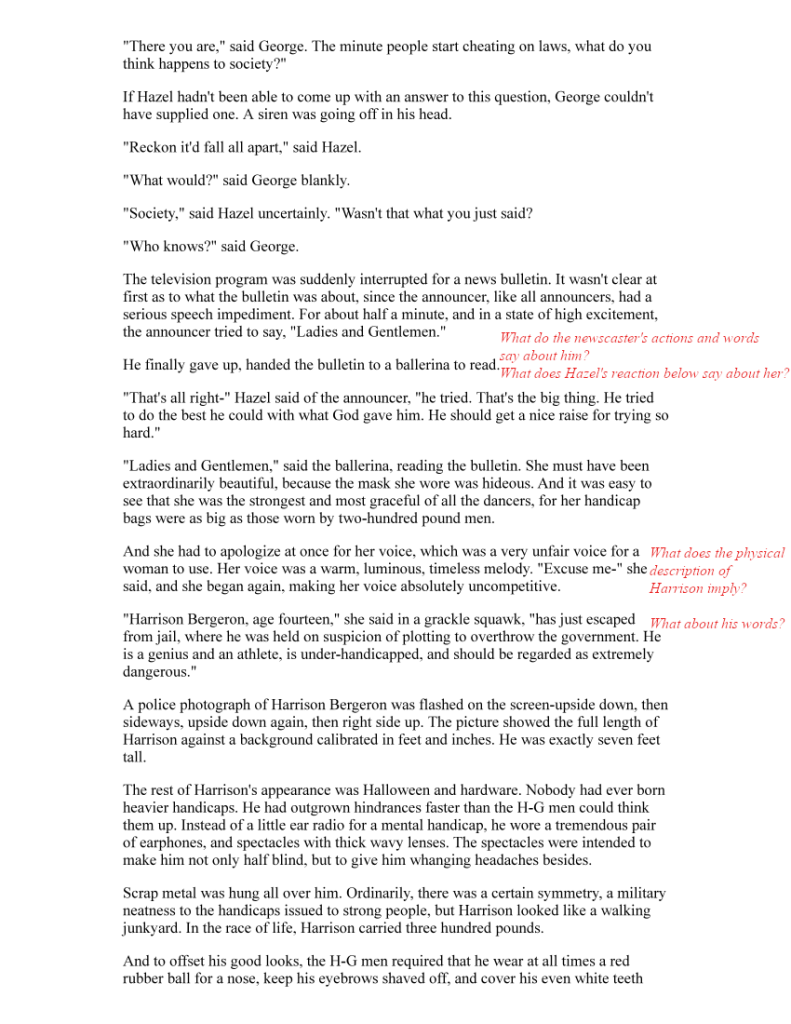
- Actions (what they do): this is just like real life. People’s actions speak louder than words, and so do characters’ actions.
- Words (what they say and how they say it): It’s not just what people say (although that’s important). It’s also how characters speak – their accent, slang, etc. AND sometimes, what they don’t say.
- Thoughts: Thoughts are two-fold. If the story is 3rd person omniscient, what characters think and feel tell us a lot about them. But we also need to pay attention to what other characters think ABOUT another character when analyzing him or her.
- Appearance (what they look like): Again, the way characters dress, wear makeup, hairstyle, hygiene. It’s all important when we analyze a character’s personality. We do the same every day when we see people for the first time or the hundredth. We make judgments.
Let’s look at the characters in “Harrison Bergeron.” First, read the story: